
When Should You Sign a Snow Removal Contract in Wisconsin?
The best time to sign a snow removal contract in Wisconsin is October or early November, before the first measurable snow. You can compare terms calmly, get your driveway on a route, and avoid the scramble. Wait until the first storm and you may land on a waitlist or settle for whatever is available.
When should you sign a snow removal contract in Wisconsin?
A good rule of thumb is to sign a few weeks before the first snow you would normally expect in your area. In Southwest Wisconsin that often means October or the first part of November, though it varies from year to year. Many homeowners find it easiest to handle this around the time they are finishing fall cleanups.
Early signing helps for a few practical reasons:
- You have time to ask questions and compare more than one provider.
- Your driveway can be looked at, measured, and mapped before it is buried in snow.
- Any issues with the property (tight turns, a steep grade, a hidden culvert) get sorted out before the first push.
- You are not making a decision while stuck in your driveway with six inches on the ground.
Snow does not follow the calendar. A wet, heavy snow can arrive early in the season, so treat the start of November as a soft deadline, not a hard one.
What happens if you wait until after the first snowfall?
Nothing catastrophic, but you may give up some options. Plow operators often build their routes around the properties they have already agreed to serve. Once a route is full, a new request has to fit around existing customers, and a provider may tell you they are not taking on more driveways until later or at all.
Here is what waiting can look like:
- Limited availability. Some providers close their lists once routes are set. You may be offered a per-visit arrangement instead of a seasonal one, or you may need to call several companies.
- Fewer scheduling options. Where you land in the route depends on your location, the terms of your agreement, and how the provider runs things. A driveway added mid-season may not get the slot you would have chosen.
- Less time to sort out details. When snow is already falling, it is easy to agree to terms without reading them closely.
- Rushed property prep. Without markers or a walk-through, the first plow pass is more likely to miss edges or catch something it shouldn’t.
If you are already past the first storm, do not panic. Call now, ask what is open, and be flexible on the arrangement. It is still better than shoveling a long driveway by hand for the rest of the winter.
Seasonal contract or per-visit service: which fits your driveway?
Both are common, and each suits a different situation. A seasonal contract covers the winter under a set arrangement. Per-visit service means you pay each time the crew comes out.
- Seasonal contract. You agree to terms for the whole season. It tends to suit long or steep driveways and people who travel or leave early for work. The main drawback is that you may pay for service in a light snow year.
- Per-visit service. You are charged each time a crew comes. It tends to suit short driveways or a backup for occasional heavy snow. The main drawback is that availability can vary from storm to storm.
If you need to get out reliably on winter mornings, a seasonal contract signed early is often the safer choice. If your driveway is short and you can handle light snowfalls yourself, per-visit service can make sense, as long as the provider confirms they will actually come.
What should a snow removal contract spell out?
A good contract is short and specific. Before you sign with any company, make sure these items are in writing:
- What is covered. Snow plowing, snow removal (hauling or pushing piles back), and deicing are separate tasks. Do not assume one includes the others. Our snow services cover snow plowing, snow removal, and deicing, and it is worth asking any provider which of those are part of your agreement.
- The trigger depth. The snowfall amount that sends a crew out.
- Where snow will be piled. Make sure it is not blocking a mailbox, a garage apron, or a drainage path.
- Which areas are included. Driveway only, or also sidewalks, front steps, and a path to the door.
- Season dates. When service starts and ends, and what happens with a late-March storm.
- Payment terms. How and when you are billed.
- Cancellation and changes. What happens if you need to adjust or end service.
- Damage process. How to report a damaged mailbox, edging, or landscape feature.
Reviewing terms like these before winter starts can help reduce misunderstandings later.
How do trigger depths and plow timing work?
The trigger depth is the amount of accumulation that sends a plow to your property. Some providers use a figure of a couple of inches, but it varies from company to company, so check yours instead of assuming. A lower trigger means more visits in a season. A higher trigger means fewer visits, but more snow to push each time.
Timing is trickier, and practice varies by provider. Some crews wait until a storm winds down, while others make passes during a long or heavy storm to keep access open. How often they come back during one snowfall usually depends on your agreement, the conditions, and where your property falls on the route. Be wary of any promise of a specific arrival time that is not in writing. Ask instead how routes are run, whether you will be told when snow has been cleared, and how heavy storms are handled.
Wisconsin snow also varies. Light, dry snow pushes easily. Wet, heavy snow packs down fast and can turn dense and icy under tires, which is where deicing becomes useful.
What should you do before the first plow arrives?
A little prep makes the first pass go better for you and the crew. Do these before the ground freezes:
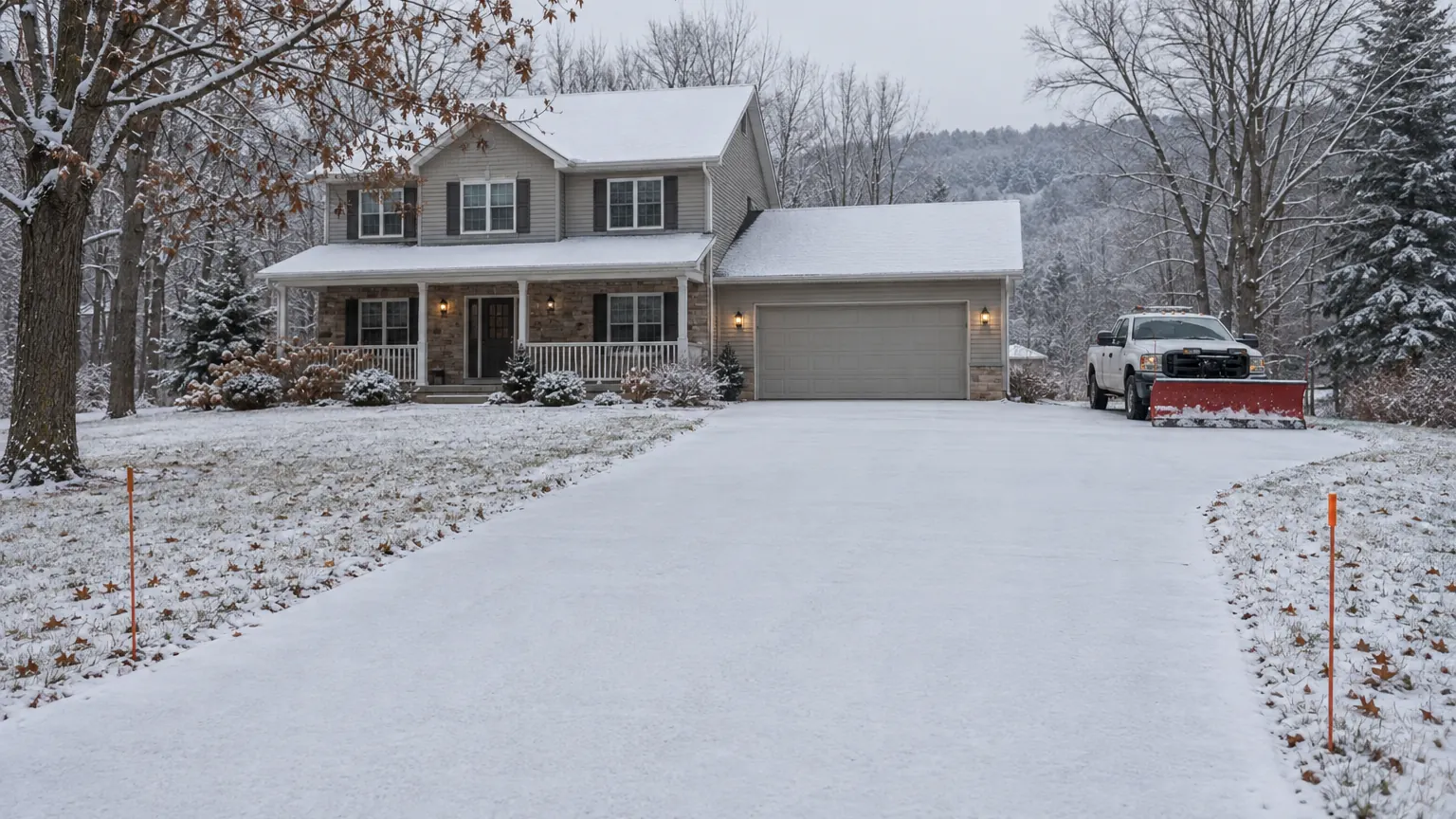
- Mark the driveway edges. Use tall stakes or reflective markers along the edges and any curves. Plows cannot see where gravel ends and lawn begins under a foot of snow.
- Flag hazards. Mark sprinkler heads, shallow landscape lighting, low retaining walls, drains, and any raised edging.
- Finish fall cleanup. Leaves and branches left on the driveway or pavers can freeze into a mess or jam equipment.
- Decide where the snow goes. Choose a pile area that is away from plantings, mailboxes, and drainage, and tell your provider.
- Check pavers and edges. Loose pavers or raised joints can catch a plow blade. Fix them before snow hides the problem.
- Move vehicles and bins. Make sure the driveway and street edge are clear on storm days.
If you would like to talk through your property and what a winter arrangement could look like, you are welcome to reach out through our contact page.
Frequently asked questions
Is it too late to sign a snow removal contract in December?
Not necessarily, but your options may narrow. Some providers will still take new customers if their routes have room, while others may only offer per-visit service. Call as early as you can and ask what is available, since availability changes by company.
What snowfall depth usually triggers a plow visit?
It depends on the provider and what your contract says. Some use a trigger of a couple of inches, but there is no universal number. Ask for the figure in writing so you know when to expect a crew.
Does a snow contract include deicing?
Not always. Plowing and deicing are separate tasks, and some contracts cover one but not the other. Check the agreement to see whether deicing is included or billed separately.
Should I mark my driveway edges before winter?
Yes. Do it before the ground freezes, using tall stakes or reflective markers along edges and curves. Also flag sprinkler heads, lighting, and low walls so the plow operator can see what to avoid under the snow.
Can I cancel or switch snow removal providers mid-season?
It depends on the terms you signed. Some contracts allow changes with notice and others do not, so check the cancellation language before agreeing. If a provider is not showing up as agreed, raise it with them in writing first.