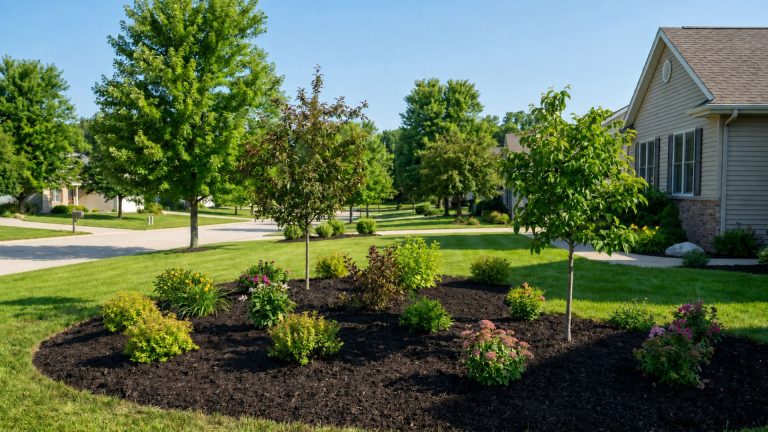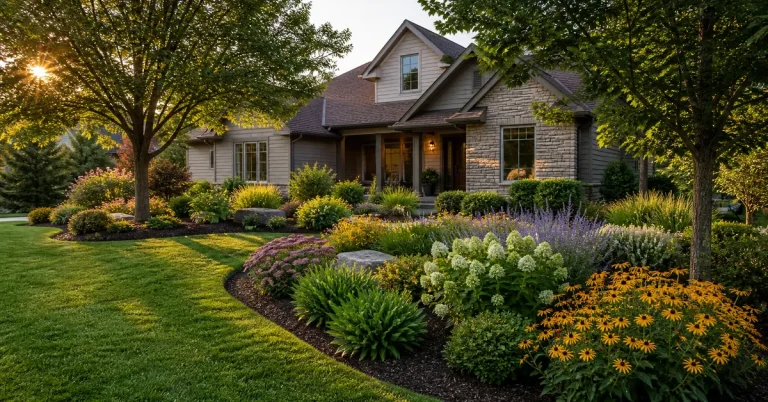
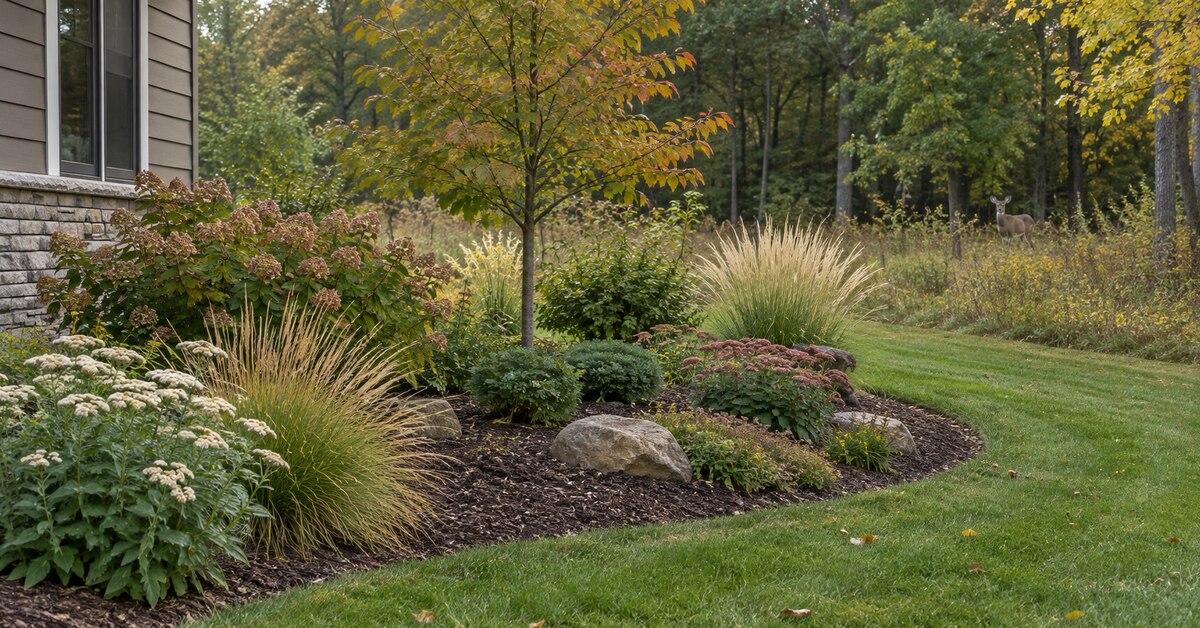
Which Plants Are Less Likely to Be Eaten by Deer in Wisconsin?
When deer browse a landscape bed, choosing plants they tend to avoid can help, but no plant list is a guarantee. Start with the damage you see, then match possible replacements to your yard’s growing conditions.
First, identify the kind of damage
Chewed leaves, buds, or flowers point to browsing. Stripped or scraped bark on a young trunk can be a different problem: in fall, bucks may rub their antlers against trunks and branches. Changing the plant species alone will not address that type of injury. Wisconsin Horticulture, UW-Madison Extension, notes that protecting plants from antler damage calls for a separate protection approach, such as fencing or repellents.
That distinction matters before you replace anything. A bed of browsed perennials may call for a different plant shortlist than a young tree with damaged bark.
Think “less favored,” not “deer-proof”
Deer preferences vary by region, and hungry deer may eat plants they usually pass over. UW-Madison Extension cautions that even plants on a “not favored” list can be vulnerable in severe conditions. Treat a list as a way to improve your odds, not as a promise that a new planting will never be browsed.
The most useful clues may already be close to home. Notice which plants deer repeatedly eat or leave alone in your yard and nearby landscapes. That local pattern can help narrow a replacement list more effectively than choosing from a generic label alone.
Use Wisconsin plant lists to build a shortlist
UW-Madison Extension’s list of plants not usually favored by deer includes options such as apple serviceberry and American hornbeam among trees, plus yarrow and butterfly weed among herbaceous perennials. These are examples to research, not a ready-made planting plan. The list itself notes that preferences vary and that no option is guaranteed.
For a larger planting, compare several suitable choices rather than relying on one “deer-resistant” species. Keep the role of each plant in view: a tree, a shrub, a groundcover, and a flowering perennial solve different design needs.
Match the plant to the actual spot
Start with the bed’s job before circling a plant name. A small tree might frame a lawn, while a perennial fills a sunny border. Neither automatically replaces a shrub that gave a walkway its shape. The UW-Madison list separates trees, shrubs, groundcovers, bulbs, and perennials for a reason: a plant’s role matters as much as its appeal to deer. Use the list to identify candidates in the right category, then check each candidate against the room available as it grows.
A plant that deer tend to avoid still needs to fit the property. Before buying replacements, note how much sun or shade the area receives, how its soil and moisture behave, how much room the plant will need at maturity, and what ongoing care it requires. UW-Madison Extension’s current plant-selection guidance recommends investigating these cultural and site characteristics instead of trying to force a plant into unsuitable conditions.
In Southwest Wisconsin, that site check is especially useful when a bed changes from sunny to shaded, stays wet after rain, or sits close to a walkway or foundation. A deer-resistant label cannot make a poor site match work.
Decide how much of the planting to change
If browsing is limited to one small area, you may only need to reconsider that section. If the same plants are repeatedly eaten across the property, look at the pattern before replanting the same choices in more locations. For young trees with rubbed bark, address the trunk damage separately rather than expecting a different species to solve it.
Keep a short record of what was damaged, what was left alone, and the conditions around each planting area. That gives you a more useful starting point for the next landscape decision and helps avoid replacing plants without changing the factors that contributed to the problem.
Plan for the yard you have
Deer browsing is one factor in plant selection, alongside light, soil, moisture, mature size, and maintenance. A locally informed shortlist and realistic expectations make a stronger plan than a promise of a deer-proof garden.
For a planting project, Forefront Lawn & Landscape, LLC’s Landscaping Installation page describes its plant installation service. You can contact the team to discuss the property and the planting area you have in mind.
Before replacing the bed, answer three questions
What was damaged? Take a wide photo of the bed and a close photo of the injured leaves or bark. A pattern of bitten flowers calls for a different decision than a rubbed young trunk. UW-Madison Extension notes that bucks do not show a species preference when rubbing; a new tree species is not a substitute for considering protection against that damage.
What survived nearby? Compare plants of a similar size and purpose in your own yard or neighborhood. Deer preferences change by location and available food, so observations close to home can refine an Extension shortlist. Do not assume a plant was avoided simply because deer have not visited it yet.
Will the replacement fit? UW-Madison’s plant-selection guide recommends checking sunlight, soil moisture, mature spread, and maintenance needs. Write those conditions down with the space needed around paths and structures. A less-favored plant that outgrows the bed or struggles in shade is not a useful replacement. These notes also make a conversation about plant installation more specific than asking for a blanket “deer-proof” package.
Common questions about deer-resistant plants
Are plants on the Wisconsin Extension list safe from deer?
No. The list identifies plants deer do not usually favor, not species they will never eat. Hungry deer and local preferences can change what gets browsed. Use the list to develop candidates, then check site fit and local browsing history.
Will a different tree stop antler rubbing?
Not reliably. UW-Madison Extension says bucks show no plant-species preference for antler rubbing. Fencing or repellents may be needed for that separate problem; a planting plan should not confuse rub protection with browsing resistance.